Questions we get asked about limestone paving
Does limestone paving need to be sealed in Perth?
Yes and in Perth conditions sealing isn’t optional. Sealing your limestone is what makes it work properly as an outdoor material. Without it the stone’s natural porosity means it will absorb stains from pool water, grease, dirt and general outdoor use.
A penetrating sealer applied straight after installation fills the pores so that liquids sit on the surface rather than soaking in. We include professional sealing in every installation and recommend resealing every three to five years.
How do you clean limestone pavers?
Routine cleaning is straightforward. All you need is a pH neutral stone cleaner, warm water and a stiff brush or low pressure washer.
The main thing to avoid is anything acidic. For specific stain types, use a product formulated for that stain on natural stone. A quick rinse after anything spills is always the best first thing to do.
Is limestone slippery when wet?
It depends on the finish. Tumbled, brushed and rough sawn limestone all provide good grip when wet and suit pool surrounds.
Honed and polished finishes can be slippery when wet, so we only recommend them for covered areas. We always inform our clients of this during the consultation.
How long does limestone paving last?
With proper installation and regular sealing, limestone paving typically holds up for 20 to 30 years or more in Perth’s climate.
It doesn’t fade, and natural stone doesn’t deteriorate the way composite or synthetic products can over time.
Can limestone pavers be used around a pool?
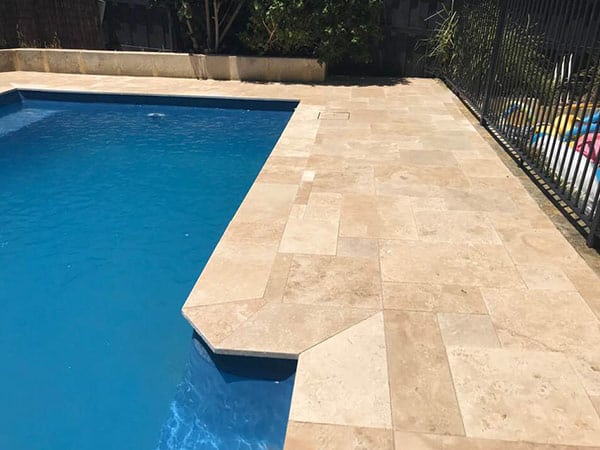
Limestone is one of the better choices for a Perth pool surround. The light, natural colours reflect heat rather than absorbing it, which makes a real difference to comfort underfoot on hot summer days. Tumbled and brushed finishes have the grip needed in a wet environment.
Do I need council approval for paving in Perth?
For most residential paving like patios, garden paths and backyard areas, council approval isn’t needed. If the project involves modifying the driveway crossover, the verge or the footpath, you’ll typically need to contact your local council before work starts. We can guide you through this.
Can you lay limestone over existing concrete?
Sometimes yes. If the existing concrete is in good condition and at a level that allows for the extra height, laying over the top is an option. If the slab has cracks, movement or drainage problems, those issues will eventually show through the new surface, so in those cases it’s usually better to start fresh. We assess this on site and give you a straight answer about the best approach.
Ready to talk about your limestone paving project?
If you’ve been thinking about limestone paving for your home, we’d love to come and take a look at your space. No pressure, no obligation, just an honest conversation about what’s possible, what materials would suit the project and what’s involved in getting it done properly.
Garden Spec has been working with Perth homeowners for over 15 years. We’re licensed and fully insured.
Every job whether it’s a small garden path or a full driveway gets the same level of care from our team.