 The mistakes that quietly ruin a hedge
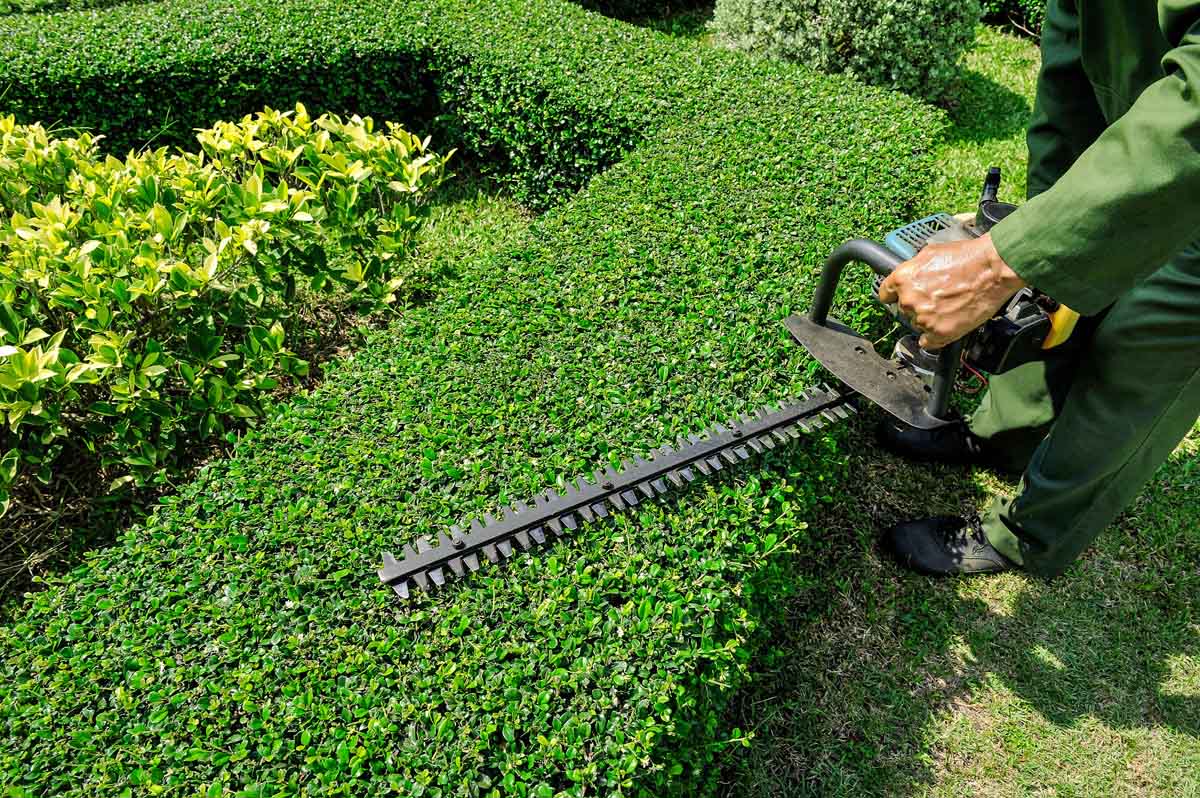
Flat vertical sides. Covered above, and it’s the big one. Taper the sides so the base is slightly wider than the top.
Cutting into old bare wood on the wrong species. Murraya, photinia, viburnum and lilly pilly will all push new growth from old wood, so you can reduce them hard and they’ll come back. Conifers won’t. Neither will lavender or rosemary. Cut a cypress hedge back past the green and you’ve made a permanent brown hole in it. Knowing which is which before the blades go in is most of the job.
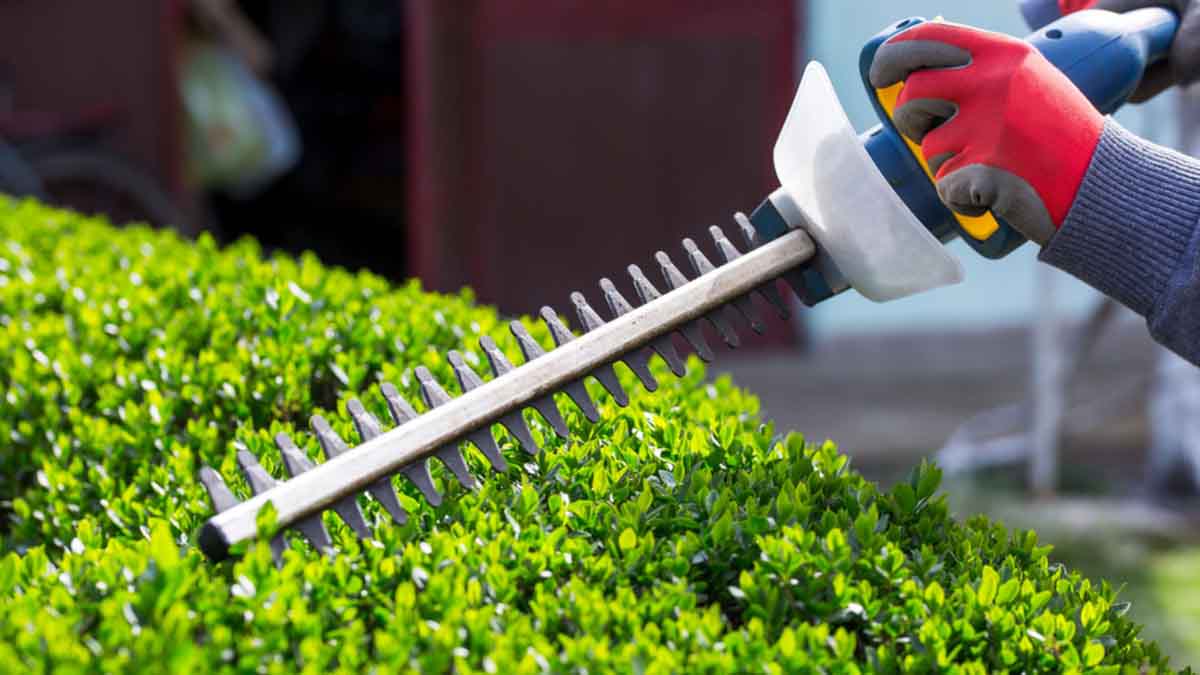
Blunt blades. A blunt hedge trimmer crushes and tears rather than cutting. The damaged leaf edges brown off within a week and the whole hedge looks scorched. Sharp blades give a clean cut that heals over.
Shearing large-leafed hedges. Run a hedge trimmer over lilly pilly or viburnum and you slice hundreds of big leaves in half. The cut halves brown at the edges and the hedge looks ragged for weeks. On large-leafed plants we’ll hand-prune the visible faces with secateurs, cutting behind the leaf rather than through it. Slower, and the finish is in a different league.
Letting a young hedge run to height first. Very common. People let the plants shoot up to the height they want, then start trimming. You end up with height and no density at the base. Clip a young hedge from the start, even though it feels like you’re holding it back, and you’ll get a solid wall instead of a row of lollipops.
Not cleaning blades between hedges. Fungal problems like photinia leaf spot and box blight travel on equipment, and there are notifiable diseases in the Myrtaceae family that no one wants to be spreading around Perth gardens. We clean down between properties as a matter of course.



 The best time of year to trim hedges in Perth
 Restoring an overgrown or bare hedge