
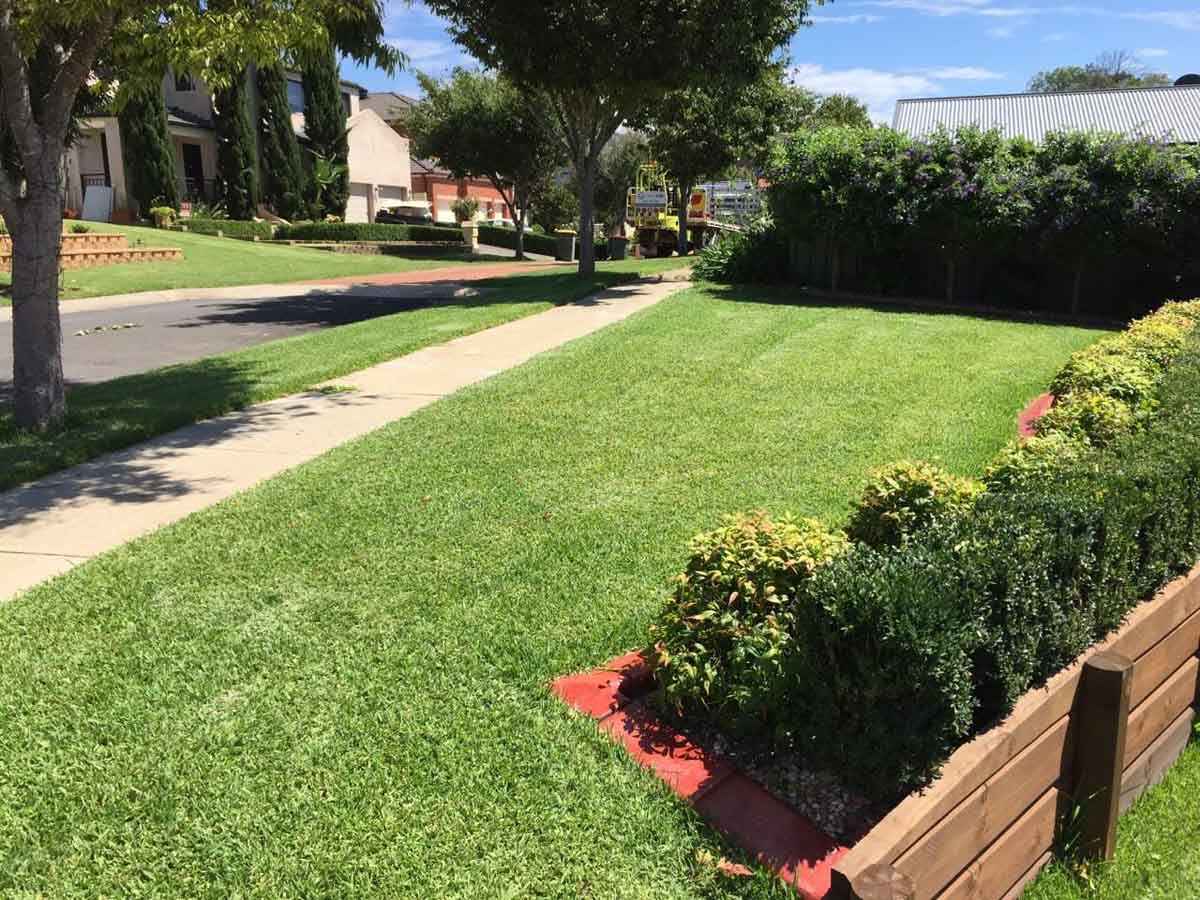
Choosing the right turf for your block
The variety matters more than most people expect, and the deciding factor is usually sunlight.
Laying turf is the easy part. Anyone can unroll it.
What decides whether you’ve got a good lawn in three years is everything that happens before the first roll goes down, and almost none of it is visible once the turf is on.
Old lawn and weeds properly killed off rather than buried.
Levels set so the finished lawn sits right against your paving.
Perth’s sand actually improved so it holds water and nutrients instead of letting both drain straight past the roots.
Skip that and you get a lawn that looks brilliant for a season, then starts fading, patching and drying out. We’ve been called out to re-do plenty of them.
Shane has been in the landscaping and turf industry for over 15 years. Here’s how we do it.
The variety matters more than most people expect, and the deciding factor is usually sunlight.
| Variety | Sun needed | Wear | Water use | Mowing | Best for |
|---|---|---|---|---|---|
| Sir Walter DNA Certified buffalo | Handles part shade, around 3 to 4 hours sun | Very good | Low once established | Moderate | The safest all-round choice for Perth homes. Soft leaf, self-repairing, good colour year round |
| Palmetto buffalo | Handles part shade | Good | Low | Moderate | Slightly finer leaf than Sir Walter, holds winter colour well |
| Kikuyu | Full sun only | Excellent | Moderate | High, it grows fast | Big open areas, active families, dogs. Cheapest per square metre, but it will invade your garden beds |
| Wintergreen couch | Full sun only | Excellent | Low | Moderate to high | Fine leaf, that manicured look. Browns off through winter |
| TifTuf hybrid couch | Full sun only | Excellent | Very low | Moderate to high | Best drought tolerance of the lot, and better winter colour than common couch |
| Empire zoysia | Part shade tolerant | Good | Low | Low, it’s slow growing | Fewer mows, low input. Slow to repair if it gets damaged |
| Sir Grange zoysia | Good shade tolerance | Moderate | Very low | Very low | Premium fine-leaf lawn. Beautiful, expensive, and slow to establish |
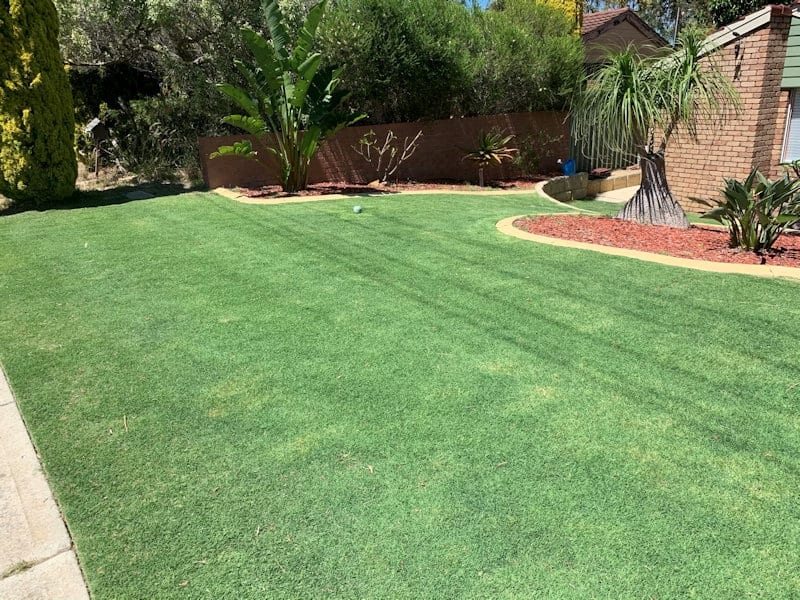 The shade question, which trips up more people than anything else
Perth’s newer suburbs are built on narrow blocks with two-storey houses either side.
A back lawn that gets full sun in December can be in shade from two o’clock in June, and the strip along the southern fence may never see direct sun at all.
Couch and kikuyu will not survive in shade.
It doesn’t matter how much you water or feed them.
They need sun, and in a shaded position they thin out, get invaded by weeds and eventually disappear.
Buffalo and zoysia are the shade-tolerant options, and even they have a floor.
Below about three hours of direct sun a day, you’re better off with a garden bed, mulch or paving than fighting a losing battle with grass.
When we come out we’ll look at where the sun actually falls at this time of year and where it’ll fall in winter, and we’ll tell you honestly if part of the area isn’t going to work as lawn.
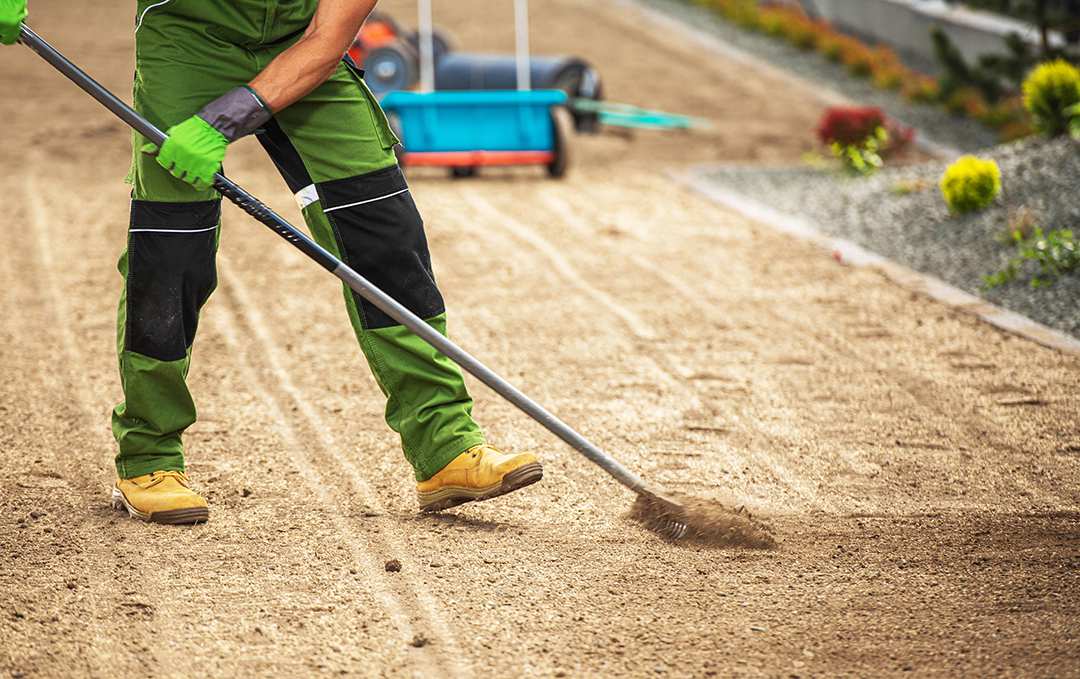 What we do before any turf arrives
This is the part worth paying for.
1. Kill off what’s there. Old lawn, kikuyu runners and weeds need to be dead, not covered up. Anything with a running root system will push straight through fresh turf within weeks. Depending on what’s there, that means a knockdown treatment with time to work, or physical removal.
2. Take the levels down. We remove enough material that the finished lawn sits slightly below your paths, paving and garden edges. Sounds like a detail. It isn’t. A lawn laid too high means the mower can’t run over the edge and you’re on your knees with a whipper snipper every fortnight for the next decade.
3. Improve the soil. Perth sand holds very little water and almost no nutrient. We work a soil conditioner through the top layer, and on straight sand a clay-based amendment makes a real difference to how much water sits in the root zone between sprinkler days. This is the step that separates a lawn that copes with February from one that doesn’t.
4. Wetting agent through the base. Applied before the turf goes on, while we can still get it into the soil rather than trying to work it through an established lawn later.
5. Starter fertiliser. A low-phosphorus starter under the turf, which suits our sandy soils and keeps phosphorus out of the Swan and Canning.
6. Level and firm. Screeded flat, lightly compacted, then checked again. Every hollow you leave now becomes a scalped brown patch every time the mower goes over it.
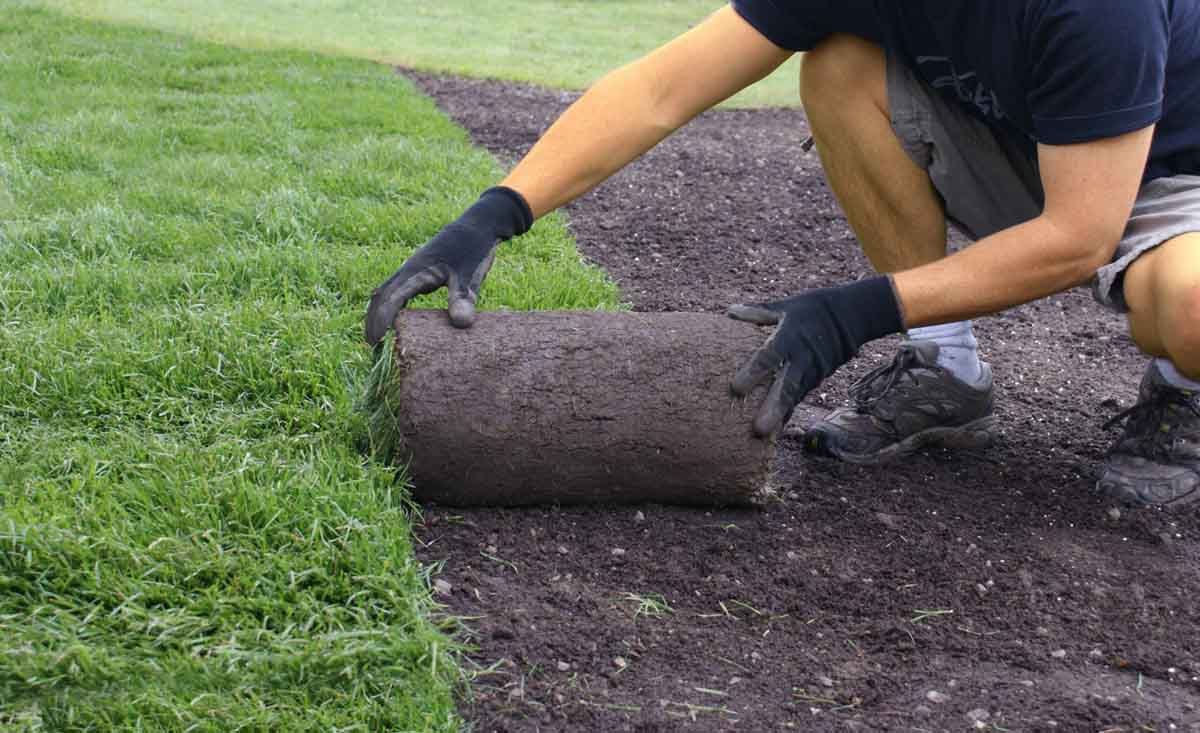 Laying the turf
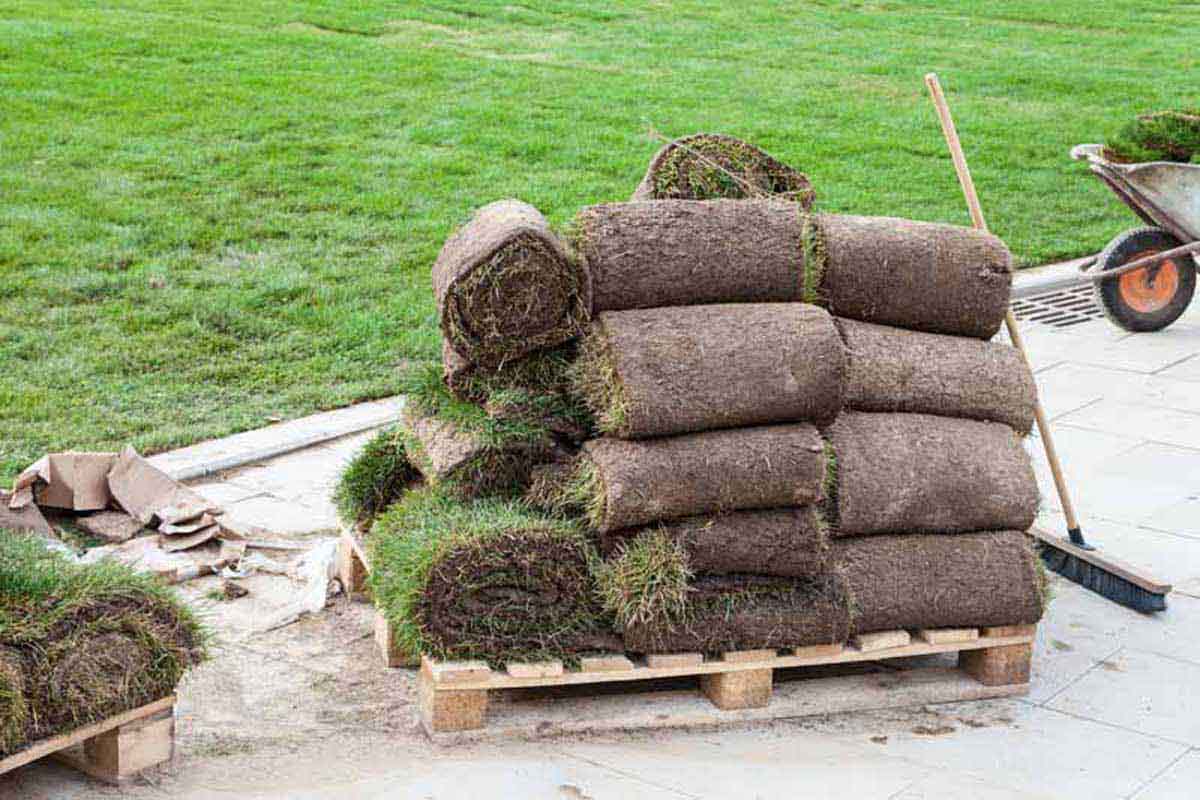
Turf is a perishable product. It’s cut fresh to order and stacked on pallets, and it starts breaking down from the moment it’s cut. In a Perth summer, rolls sitting on a pallet in the sun can heat up internally and cook within hours. We time delivery to the day we’re laying and we get it down fast. If anyone offers to drop turf at your place a couple of days early, say no.
Brick-bond pattern, tight joints. Rows staggered like brickwork, with every roll butted hard against its neighbour. Gaps between rolls dry out from the edges and shrink further, so a lawn laid loose will have visible seams for months. Edges and curves get cut cleanly with a knife.
Rolled in. Light rolling presses the turf into the soil so the roots make contact and start growing down. No contact, no establishment.
Watered immediately. In warm weather we water sections as we go rather than waiting until the whole job is finished.
Cleaned up properly. Offcuts, pallets and rubbish taken away, hard surfaces swept and blown down.
Spring and autumn are ideal. Warm soil, active growth, manageable water demand. Turf laid in September or March will knit down within two to three weeks.
Summer works but costs you in water. New turf in January has no root system and needs daily watering to survive. It’s doable, and we do it, but it’s the most demanding and least forgiving time of year.
Winter is slower than people expect. The turf will establish; it just takes its time, because root growth in warm-season grasses more or less stops when the soil is cold. Laid in July, a lawn may not really take off until September. Perfectly fine if you’re not in a hurry.
 Watering a new lawn under Perth’s sprinkler roster
This catches almost everyone out, so it’s worth being clear about it.
Perth’s standard roster allows watering two days a week on your allocated days. New turf needs water every day for the first couple of weeks. Those two things don’t line up.
Water Corporation grants exemptions for newly laid turf, usually covering a set period from installation, including through the winter sprinkler switch-off between 1 June and 31 August. You need to apply, and it’s straightforward. We’ll remind you to sort it out before we lay, not after.
Rough guide once it’s down:
The aim through the whole process is to push roots downwards. Frequent light sprinkles keep roots at the surface and give you a lawn that falls over the first hot week.
Stay off it. Two to three weeks minimum, longer in cool weather. Foot traffic on turf that hasn’t rooted down slides the rolls apart and opens up the joints.
First mow at around two to three weeks. Test it by lifting a corner. If it resists, the roots have taken and you can mow. Set the mower high for the first cut, and never take more than a third off in one go.
Don’t feed it early. The starter fertiliser under the turf is doing the work. A heavy feed on a lawn without a root system just pushes leaf growth the plant can’t support. Around six weeks is the time for the first proper fertilise.
Expect some shrinkage at the joints in the first fortnight, particularly in warm weather. It closes up as the turf knits together. Keeping the water up is what stops it becoming permanent.
Turf laid over a bad retic system is a problem you have to lift the lawn to fix.
It’s worth checking coverage, pressure and head placement before anything goes down, while the ground is open and easy to work with. Poor coverage shows up as dry patches in exactly the same spots every summer for years, and by then the fix is far more disruptive than it would have been on day one.
We troubleshoot, repair and maintain reticulation, so we can check the system as part of the turf job rather than sending you to somebody else.
 How much turf do you need?
Measure the length and width of each area in metres and multiply for the square metres.
Add roughly 5 to 10 per cent for cuts, curves and waste.
Odd shapes, garden bed edges and circular beds push that figure up.
Or send us the dimensions and we’ll work it out, along with the cost of the turf, the prep and the labour, so you’re comparing a real number rather than a rate per square metre that leaves out the groundwork.
Our teams run through Perth’s western and northern suburbs every day, including Trigg, Sorrento, Dianella, Churchlands, Kingsley and surrounds.
We handle new builds, full lawn replacements, verge lawns and smaller areas where a lawn has never worked. We can also keep it looking good afterwards through regular mowing and lawn care, so the lawn you paid for in year one still looks like that in year five.
Give Shane a call with your measurements, or send through a photo of the area and roughly which way it faces. We’ll talk you through which variety suits the position and what the groundwork involves. Free quote, no obligation.