Garden Mulching Perth

Mulch is the cheapest thing you can do for a Perth garden, and the thing most gardens are missing.

Our sand holds almost nothing. Water goes straight through it, nutrients wash out behind the water, and by January the top few centimetres of an unmulched bed are hot enough to cook roots.

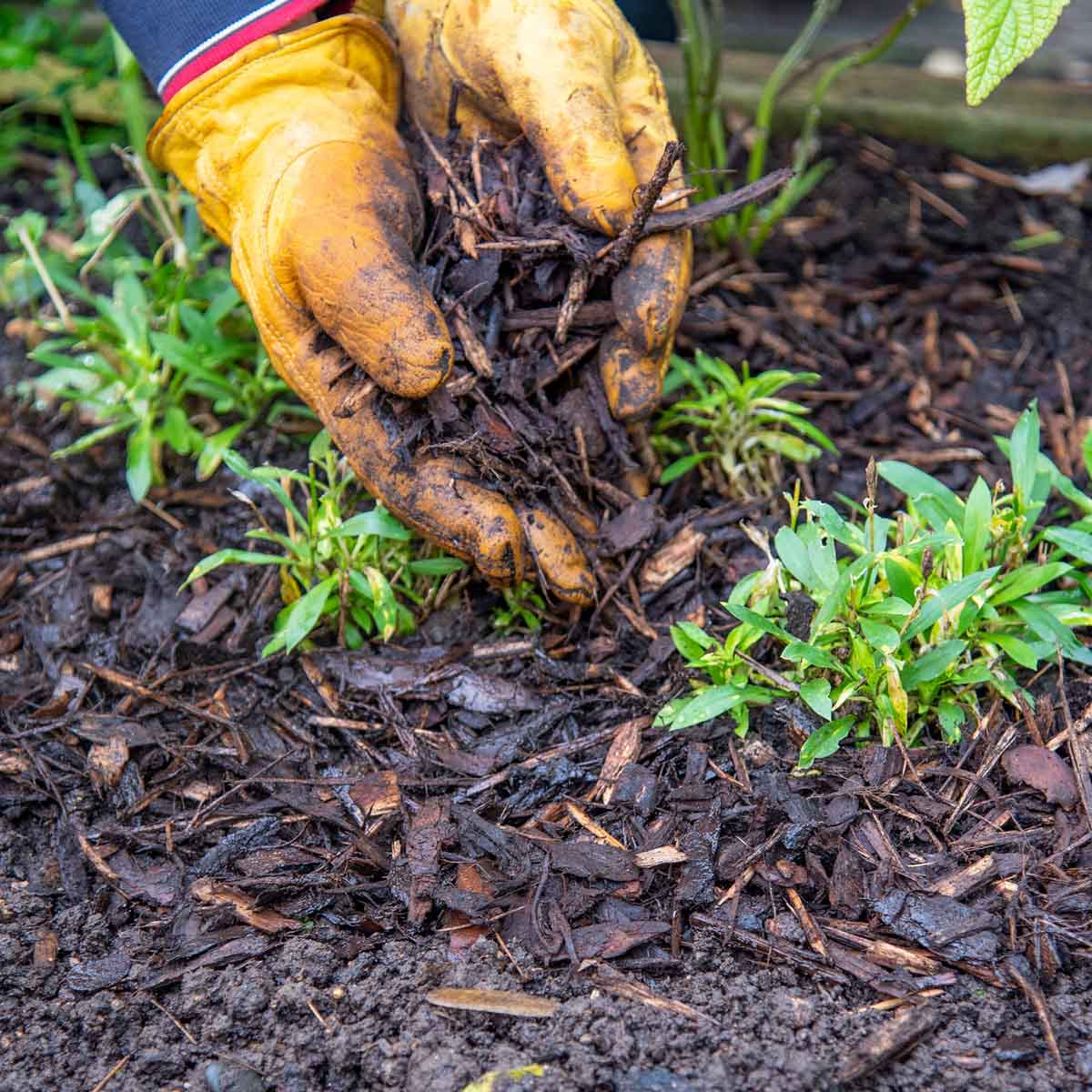
Put 50 to 75mm of the right mulch over that same bed and you cut evaporation right back, keep the soil temperature down, smother most of the weed seed, and slowly build the organic matter our soils have never had much of.

The catch is the words “the right mulch”.

There are a dozen products sold as mulch in Perth and they behave very differently.

Some of them will actively make your garden drier. Here’s what we use, and what we’d put where.

The one rule that matters most in Perth

Go coarse.

Fine mulch is the most common mistake we see in Perth gardens.

Finely shredded product, sawdust-heavy mulch and thick layers of fine compost all do the same thing over time: they knit together into a dense mat, that mat dries out, and then it repels water. You end up watering the mulch instead of the soil. Lift a corner of it in February and the sand underneath is bone dry.

Coarse, chunky mulch has gaps in it. Water falls through, air moves through, and it takes years rather than months to break down.

It’s also far less likely to blow off the bed in the afternoon sea breeze, which matters in Trigg, Sorrento and the rest of the coastal strip.

If you take nothing else from this page: chunky beats fine, nearly every time.
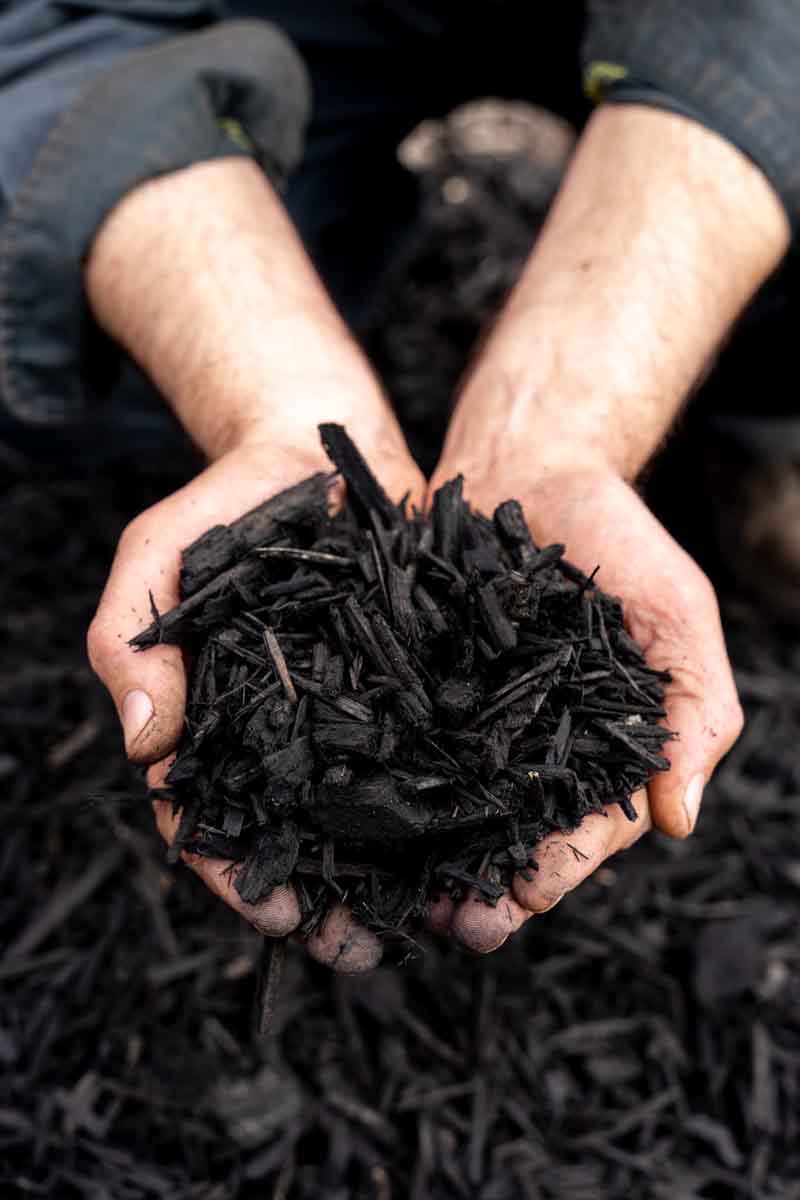
Types of mulch we use in Perth

Woody and long-lasting

Jarrah chip
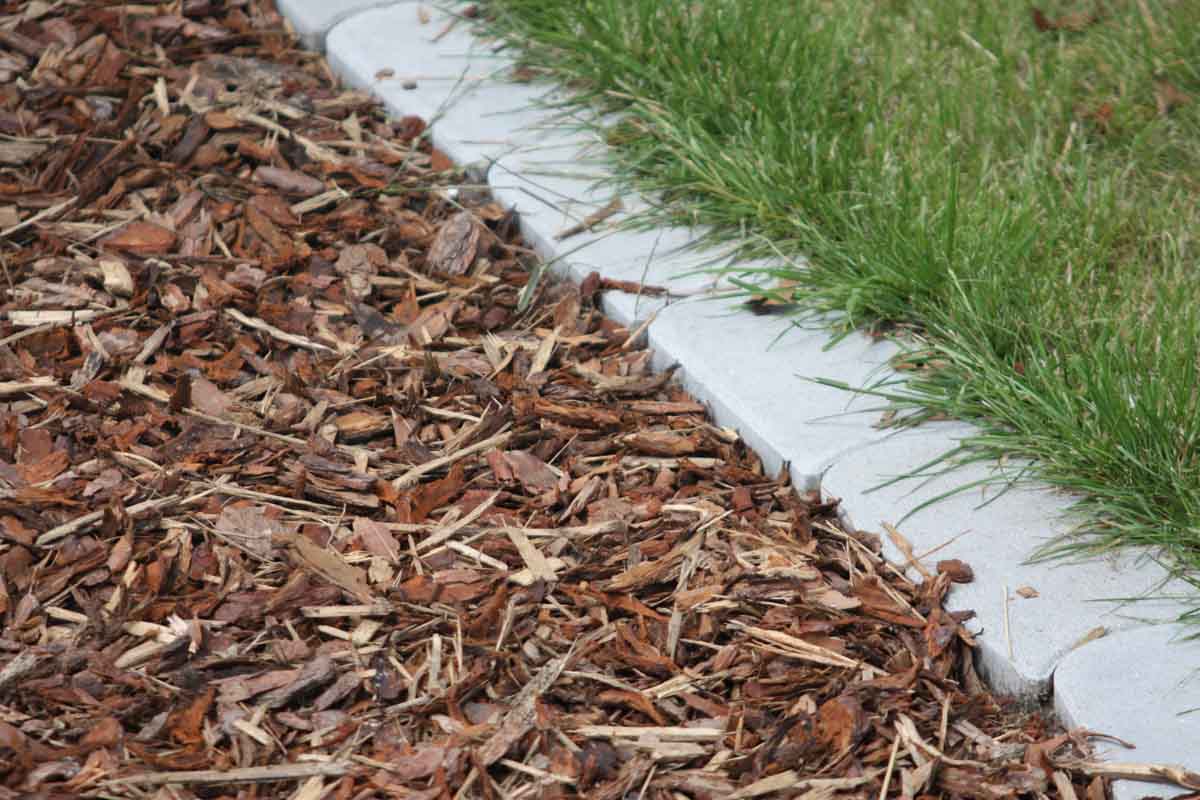
The WA classic, and our most-used product for general garden beds. Deep red when it goes down, weathering to a softer brown over a year or so. Chunky, heavy and slow to break down, so it stays put on slopes and windy verges and you’re not topping it up every season. A good all-rounder for shrub beds, native gardens, verges and around established trees.

Mulching for gardenPine bark
Sold in several grades from small chip through to large nuggets. Clean, tidy look that suits front gardens and formal beds.

Slow to break down, and slightly acidic as it ages, which suits many natives along with camellias, azaleas and gardenias.

The larger nugget grades are excellent in windy spots.

Composted arborist woodchip
Recycled tree waste, chipped and composted.

Cheaper per cubic metre than the decorative products and genuinely good for the soil as it breaks down.

Colour and texture are variable, so it suits informal beds, orchards and areas under trees better than a showpiece front garden.

Always use it composted rather than fresh, or it will pull nitrogen out of the top layer of soil while it rots.

Recycled green waste mulch
Council and commercial green waste, composted and screened.

Look for product certified to AS 4454, the Australian Standard for composts and mulches.

The composting process kills off most weed seed and pathogens, which is the whole reason to pay for a certified product rather than take whatever’s going.

Straw and fast-breakdown mulches

These are soil builders more than long-term covers. They break down in a season or two and feed the soil as they go, which is exactly what you want in a vegie patch and exactly what you don’t want on a low-maintenance verge.

Lupin mulch
A WA product and a good one. Lupins are a legume, so the residue carries nitrogen with it, and it breaks down into our sand beautifully. Great for vegie beds and for lifting the organic matter in a bed that’s been neglected.

Pea straw
Same legume benefit, widely available, breaks down fast and improves soil structure noticeably. Fair warning: it often sprouts peas. Some people find that charming, some don’t.

Sugar cane mulch
Fine, light and quick to break down. Fine for a sheltered vegie bed. Useless anywhere the wind gets at it, because it will end up in your neighbour’s pool.

Lucerne
The richest of the straw mulches and the dearest. Worth it around hungry plants like roses, citrus and vegies where you want the feed as much as the cover.

Garden mulchDecorative and inorganic

Gravel, crushed granite and blue metal
Permanent, no top-ups, no breakdown. Suits modern and low-water gardens, succulent beds, pathways and the strip along a driveway. Won’t feed your soil, so it works better around established plants than in a bed you’re still building.

Pebble and river stone
Neat, decorative, holds well in wind. Popular around pots, water features and courtyard beds.

Scoria
Lightweight red volcanic rock. Good drainage, striking colour, often used in native and dry-style plantings.

Limestone chip
Worth a note of caution. Much of Perth’s Spearwood sand is already alkaline, and limestone will push the pH up further. Fine as a pathway or in a coastal garden of lime-tolerant plants, less so around anything that wants acidic soil.

What we’d recommend, by situation

Your situation What we’d usually put down
General shrub and garden beds Jarrah chip or coarse pine bark, 50 to 75mm
Native garden Coarse jarrah or pine bark. Keep away from manure-based and high-phosphorus mulches, which many WA natives dislike
Vegetable beds Lupin, pea straw or lucerne. Refresh each season
Around fruit trees and citrus Composted woodchip or lucerne, kept well clear of the trunk
Rose beds Composted mulch or an aged manure blend, not touching the stems
Verges and nature strips Chunky jarrah chip, heavy enough to stay put and handle foot traffic
Sloping beds Chunky jarrah or large-grade pine bark. Fine mulch washes to the bottom in the first storm
Exposed coastal gardens Large-grade chunky product or gravel. Straw mulches will not survive the sea breeze
Shaded beds under trees Composted arborist chip
Right against the house in bushfire-prone areas Gravel or pebble rather than woody mulch. Check your local council and DFES guidance
Modern or low-water landscaping Crushed granite, pebble or scoria
Pots and planters Coarse bark or pebble

mulching with barkHow we lay mulch, and why the prep matters

Mulch spread over dry, water-repellent sand locks that dryness in. So we don’t just tip and rake.

We weed the bed first. Mulch suppresses new weed seed, it doesn’t kill what’s already established. Anything with a running root system needs to come out beforehand or it’ll push straight through.

We wet the soil down. Ideally we mulch after decent rain, or after the beds have had a proper soak. If the sand is repelling water we’ll put a soil wetter through first so the moisture actually gets in before we cover it.

We go 50 to 75mm deep. Thick enough to shade the soil and stop weeds germinating, not so thick that light rain never reaches the ground. Piling mulch 150mm deep is a waste of money and works against you.

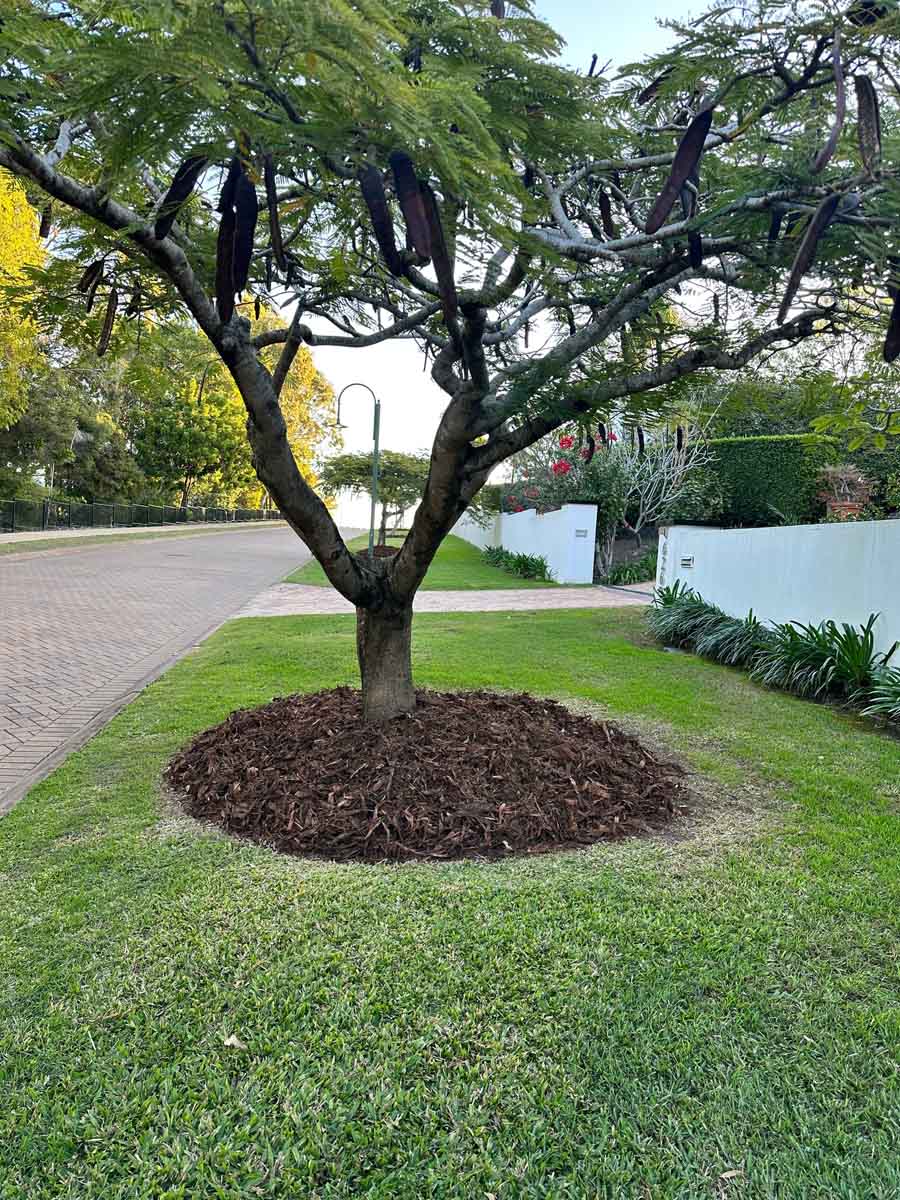
We keep it off the stems. A 50 to 100mm gap around trunks and stems, every time. Mulch banked up against a trunk holds moisture against the bark and invites collar rot. That volcano of mulch heaped around a street tree is one of the most common and most damaging things done in gardens.

We keep woody mulch away from the slab edge. Deep damp woodchip against house footings is an invitation you don’t want to send to termites.

How often does mulch need topping up?

Depends entirely on what went down.

Straw mulches in a vegie bed will be largely gone in a season. Composted woodchip usually wants a top-up every year or so. Jarrah chip and coarse pine bark will hold for two to three years before they need refreshing, though the colour will soften well before the mulch has actually broken down.

That breakdown isn’t waste, by the way. It’s the mulch doing its second job: turning into the organic matter Perth sand is short of. A bed that’s been mulched properly for five years is a much better bed to plant into.

We can fold mulch top-ups into a regular garden maintenance visit so it just gets handled, rather than being the job you remember in the middle of a heatwave.

Mulch supply and spreading across Perth

We supply the mulch, deliver it and spread it. No trailer loads in your driveway, no wheelbarrowing it around the side of the house on a Sunday, no leftover pile sitting there for six months.

Our teams work through Perth’s western and northern suburbs daily, including Trigg, Sorrento, Dianella, Churchlands, Kingsley and surrounds.

Get your garden mulched

Give Shane a call and we’ll come out, look at your beds and your soil, and tell you which product actually suits them. Quotes are free and there’s no obligation.

Call 0408 479 961

Honest, reliable and friendly service.