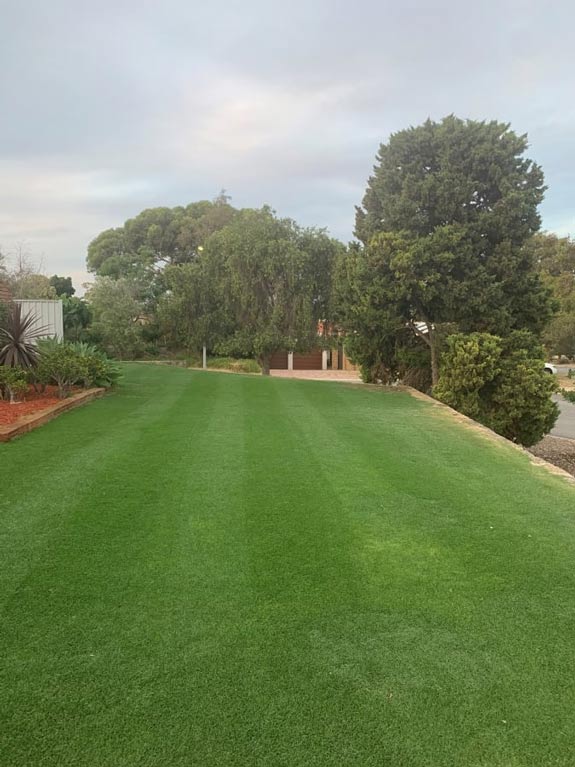
Most people call us about a lawn problem once the brown patch has spread across half the yard. By then the question isn’t really “what’s wrong with it”, it’s “how much of this can we save”.
The frustrating part is that dead patches in a Perth lawn have maybe six or seven likely causes, and they need completely different treatments. Beetle grubs. Caterpillars. Fungus. Water repellent sand. A retic head that’s been blocked since November. Treat the wrong one and you’ve spent money making no difference at all, while whatever’s actually eating your lawn keeps going.
So the first thing we do is work out what it is. Then we treat it.
Start here: is it actually a pest?
Quick check before you buy anything. Grab a handful of grass at the edge of a dead patch and pull.
If it lifts away like a piece of carpet with no roots underneath, something has eaten the roots. That’s almost always curl grubs, the larvae of African black beetle.
If the roots are intact but the leaf has been chewed down to stubble, something is eating from the top. That’s caterpillars, usually lawn armyworm.
If the roots are fine and the leaf is fine but the whole patch is a dull straw colour in a rough circle, you’re likely looking at a fungal disease.
If the soil under the patch is bone dry after the sprinklers have been on, it isn’t a pest at all. It’s water repellent sand, and no insecticide on earth will fix it.
That two-second test rules out more wrong answers than anything else.
Adults are shiny black beetles about 12 to 15mm long. They fly in spring, around September through November, and you’ll often find them around outside lights or floating in the pool. The adults chew grass stems at soil level. Then they lay eggs, and the real damage comes from the larvae.
Those larvae are curl grubs: fat, white, C-shaped things with a brown head and a dark rear end. They sit in the top 50 to 100mm of soil eating roots through summer and into autumn.
Signs to watch for: irregular dead patches that spread through summer, grass that lifts like a mat, a spongy feel underfoot, and birds. If ravens and magpies are systematically working over your lawn and flicking bits of turf around, they’re not being difficult. They’re eating grubs, and they found them before you did.
How we check: cut and lift a square about 300mm by 300mm, 100mm deep, and count. A few grubs is normal in any Perth lawn. Once you’re consistently finding three to five or more per square, it’s worth treating.
Timing matters enormously. Treating small grubs in late spring and early summer gets a far better result than trying to kill large, well-fed grubs in autumn once the damage is already done.
Lawn grub and armyworm
Different animal, different season, different treatment.
These are caterpillars, and they turn up from about February through to April. They feed at night on the leaf blade, so the lawn gets shorter and thinner rather than dying in patches. Damage often starts along a garden bed edge or under a tree and spreads across the lawn. It can move fast. A bad infestation will strip a lawn in under a week.
Signs: small brown moths flying up in front of the mower, bird activity, ragged chewed leaf tips, and a lawn that looks like someone mowed it too low overnight.
The bucket test. Mix a good squirt of dishwashing liquid into a bucket of water and pour it over a square metre at the edge of the damage. If they’re there, the caterpillars will come to the surface within a few minutes. Cheap, quick, and it removes all doubt.
Couch mite
Affects couch lawns. Microscopic, so you never see the pest, only the symptom: shortened, bunched, rosetted growth at the nodes that people describe as looking like a witch’s broom. Growth stalls and the lawn thins out. Management combines regular low mowing with removal of clippings, plus a targeted treatment.
Ants
More of a nuisance than a threat to the grass, though the coastal brown ants that throw sand mounds up through lawns and paving right along Perth’s coastal suburbs are a genuine annoyance. Argentine ants are a different matter again and are a declared pest in WA, so if you think you’ve got them it’s worth reporting.
Nematodes
Microscopic soil-dwelling roundworms that attack roots. More common in sandy soils than most people realise. The symptom is vague: a lawn that declines slowly, wilts easily, and doesn’t respond to feeding or watering. Usually a diagnosis of exclusion once everything else is ruled out.
A thick, healthy, well-fed lawn with a decent root system leaves nowhere for weed seed to germinate. Weeds move into thin lawns, compacted lawns, hungry lawns and lawns mowed too short. You can spray every season for years and the weeds will keep coming back, because you’re treating the outcome and not the cause.
That’s why our weed programs run alongside the mowing, feeding and soil work rather than instead of it. If a lawn is badly infested and thin underneath, we’ll often recommend a full lawn renovation as the more sensible spend.
Winter weeds
These germinate with the autumn break and run through winter and spring.
Winter grass (Poa annua)
Light green tufty clumps that seed at any mowing height. The single most common Perth lawn weed. The important thing about winter grass is that the best control is a pre-emergent applied in about February or March, before the autumn rains trigger germination. Once it’s up and seeding, your options narrow considerably and depend on your turf type.
Bindii
The prickle weed. Here’s the mistake almost everyone makes: they treat bindii in November when the burrs are stabbing their feet. Far too late. Bindii germinates in autumn and stays small and soft through winter, then forms the spiky seed in spring. Treat it in June, July or August while it’s a soft little rosette and you never feel it at all.
Capeweed, soursob, clover, cat’s ear and plantain
The broadleaf crew. Clover in particular is worth reading as a message: it fixes its own nitrogen, so a lawn full of clover is usually a lawn that’s underfed.
Summer weeds
Nutgrass
The one that beats everybody. Bright green, grows visibly faster than the surrounding lawn, and has a triangular stem you can feel if you roll it between your fingers. Pulling it makes it worse, because it grows from underground tubers and breaking the stem triggers the tubers to shoot. Nutgrass needs a specific selective herbicide and usually more than one application. Anyone who tells you it’s a one-hit job hasn’t dealt with much of it.
Summer grass and crowsfoot
Fast growing annual grasses that exploit any thin patch through the warm months.
Khaki weed
Low, spreading, savagely prickly. Worth acting on early before it establishes.
Kikuyu or couch invading a buffalo lawn
Extremely common in Perth. Also one of the harder problems, because you’re trying to kill a grass inside another grass. Options exist but they’re variety-specific and need a careful hand.
Why we don’t just hand you a bottle
Selective herbicides are selective to a particular turf type. A broadleaf product that’s perfectly safe on a couch lawn can seriously damage buffalo. Rates that work in a cool climate can burn in a Perth summer. Get the wrong product on the wrong lawn on the wrong day and you’ll do more damage than the weeds were doing.
We identify the turf variety first, then choose the product, then apply at the right rate and the right time of year.
Lawn diseases
Fungal disease in Perth lawns is driven mostly by one thing: how long the leaf stays wet.
Fungus needs moisture on the leaf surface for hours to establish. Water in the evening and the leaf stays damp all night, every night. Water in the early morning and it dries within a couple of hours. Perth’s sprinkler roster allows watering before 9am, and that early morning window is the single best free thing you can do for lawn disease.
Brown patch
Roughly circular brown patches that expand outwards, sometimes with a darker smoky ring at the edge. Loves warm days with cool, damp nights, which is exactly what Perth gives you in autumn. Common on buffalo and couch.
Dollar spot
Small straw-coloured spots about the size of a coin that merge into larger patches. Strongly associated with underfed lawns. Often the fix is nitrogen more than fungicide.
Take-all patch
Sunken, thinning, dying patches that don’t recover, and weeds move into the gaps. More of a problem on the alkaline sandy soils common through parts of Perth. Slow to deal with and needs a soil-focused approach, not just a spray.
Fairy ring
Dark green rings, sometimes with mushrooms, often with a dead or dry band inside. The fungus is usually feeding on buried organic matter, and it makes the soil inside the ring water repellent, which is what actually kills the grass. Wetting agents and deep watering do more here than fungicide.
Rust
Orange powder that comes off on your shoes and the mower. Turns up on underfed lawns and in shady spots with poor air movement. Usually a nutrition and airflow problem.
Identify first
No spraying blind. We check root condition, thatch depth, soil moisture and turf variety before deciding anything.
Fix the conditions
Mowing height, watering timing, thatch, compaction and nutrition sit behind most lawn problems. Sorting those out prevents the next problem as well as the current one.
Treat with a registered product, at the right rate, at the right time
Chosen for your turf variety and the actual pest, not a general-purpose knock-down.
Tell you what to do afterwards
How long to keep kids and pets off, when to water it in, and what to expect over the following fortnight.
Lawn pest and weed control across Perth
We work through Perth’s western and northern suburbs daily, including Trigg, Sorrento, Dianella, Churchlands, Kingsley and surrounds. Pest, weed and disease work can be done as a one-off, or folded into an ongoing lawn care program so the seasonal jobs like the winter grass pre-emergent and the bindii treatment happen at the right time without you having to keep a diary.
Something eating your lawn?
Send us a photo of the damage and we’ll usually be able to tell you what you’re dealing with. Or give Shane a call and we’ll come and take a look.

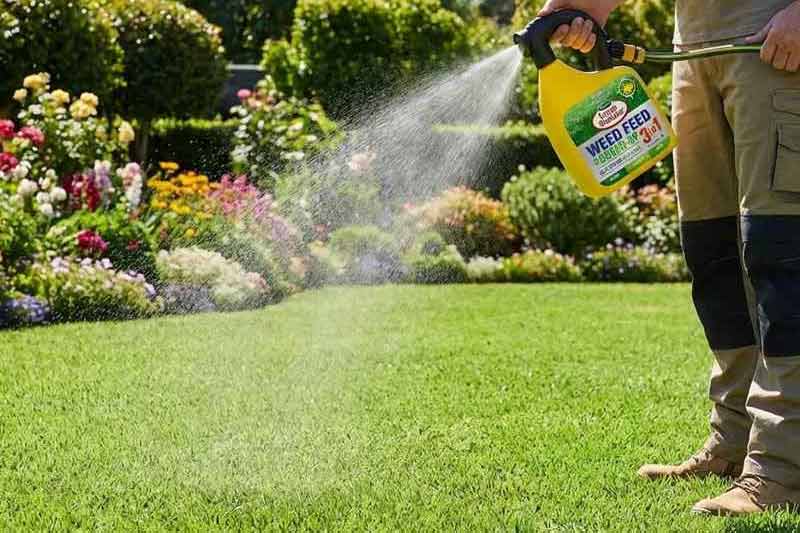
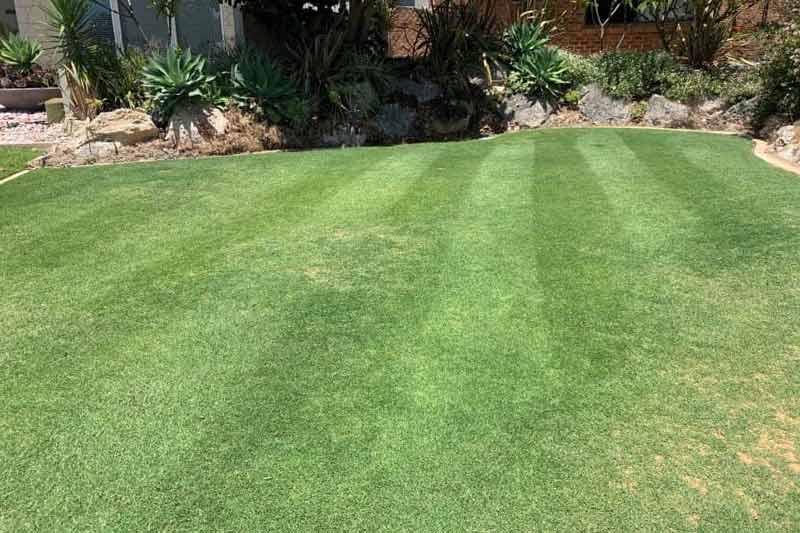 The lawn pests we deal with in Perth
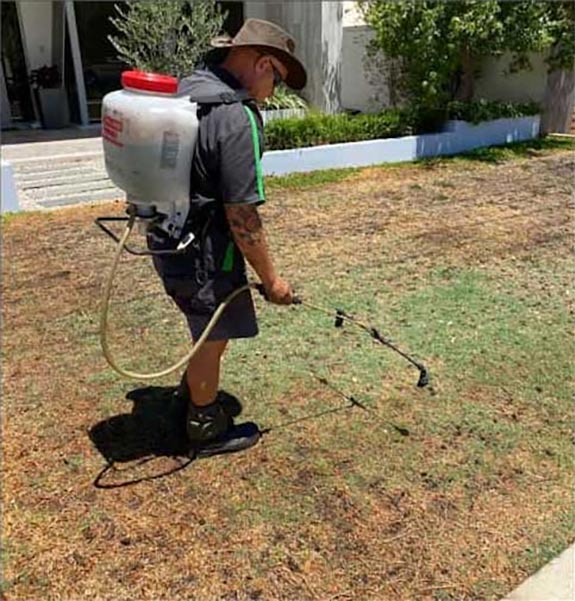 Weed control